Introduction: Navigating Indian Gaming Regulations
The digital gaming ecosystem in the Republic of India has undergone unprecedented expansion over the past decade. Platforms like Hero11 (commonly searched as Hero 11) have capitalized on widespread 5G mobile connectivity, affordable smartphones, and ubiquitous UPI payment infrastructure to deliver complex gaming experiences directly to millions of handheld devices.
However, rapid growth has created significant regulatory tension. Online gaming in India occupies a complex legal intersection governed by centuries-old colonial statutes, landmark constitutional jurisprudence, state-specific legislative bans, and strict central direct and indirect taxation mandates.
For consumers evaluating platforms like Hero11, understanding these legal frameworks is not merely an academic exercise—it is essential for protecting financial assets, personal privacy, and statutory rights.
In this exhaustive legal and consumer protection guide, we examine the constitutional skill-versus-chance doctrine, survey state-level prohibitions across India, dissect the 30% TDS and 28% GST tax structures, audit mobile APK sideloading risks, and outline practical responsible gaming protocols.
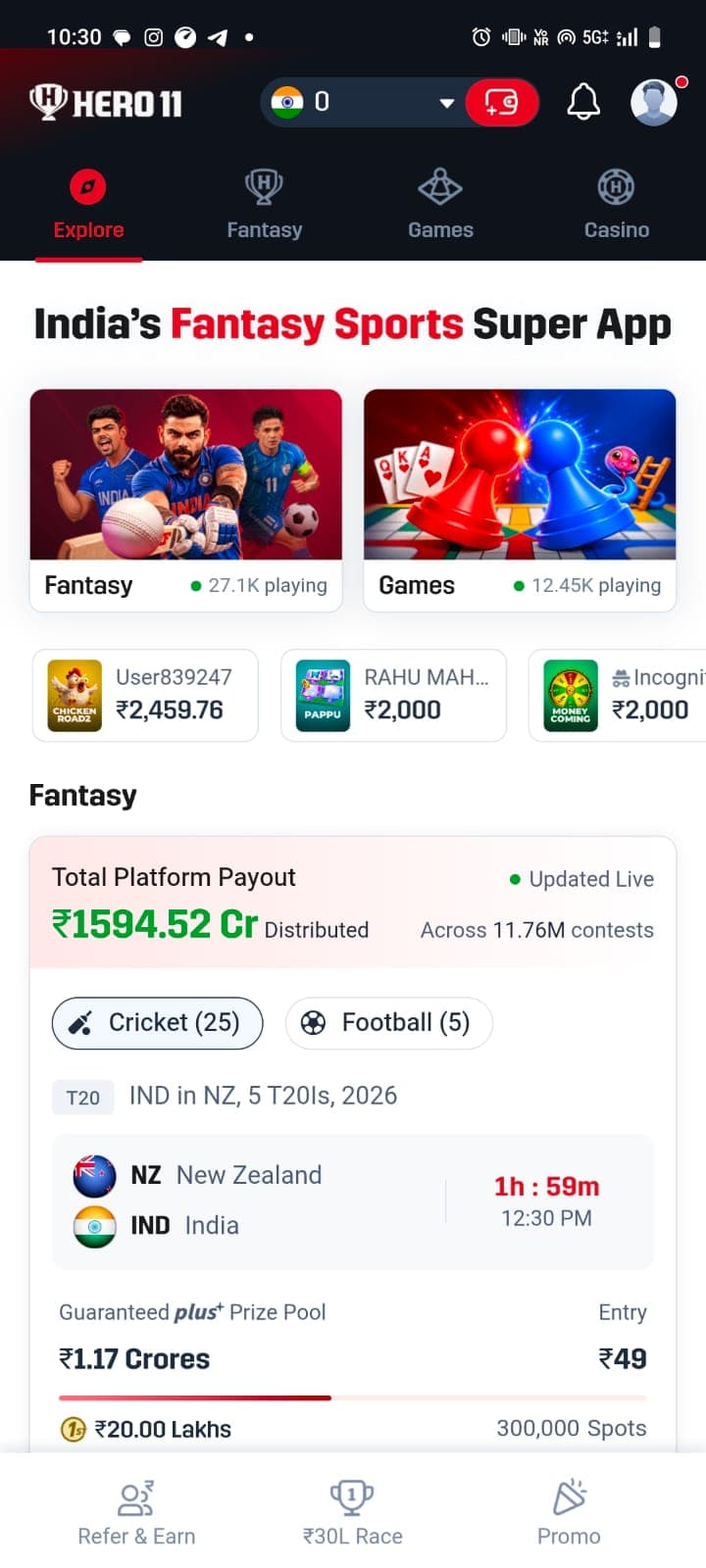
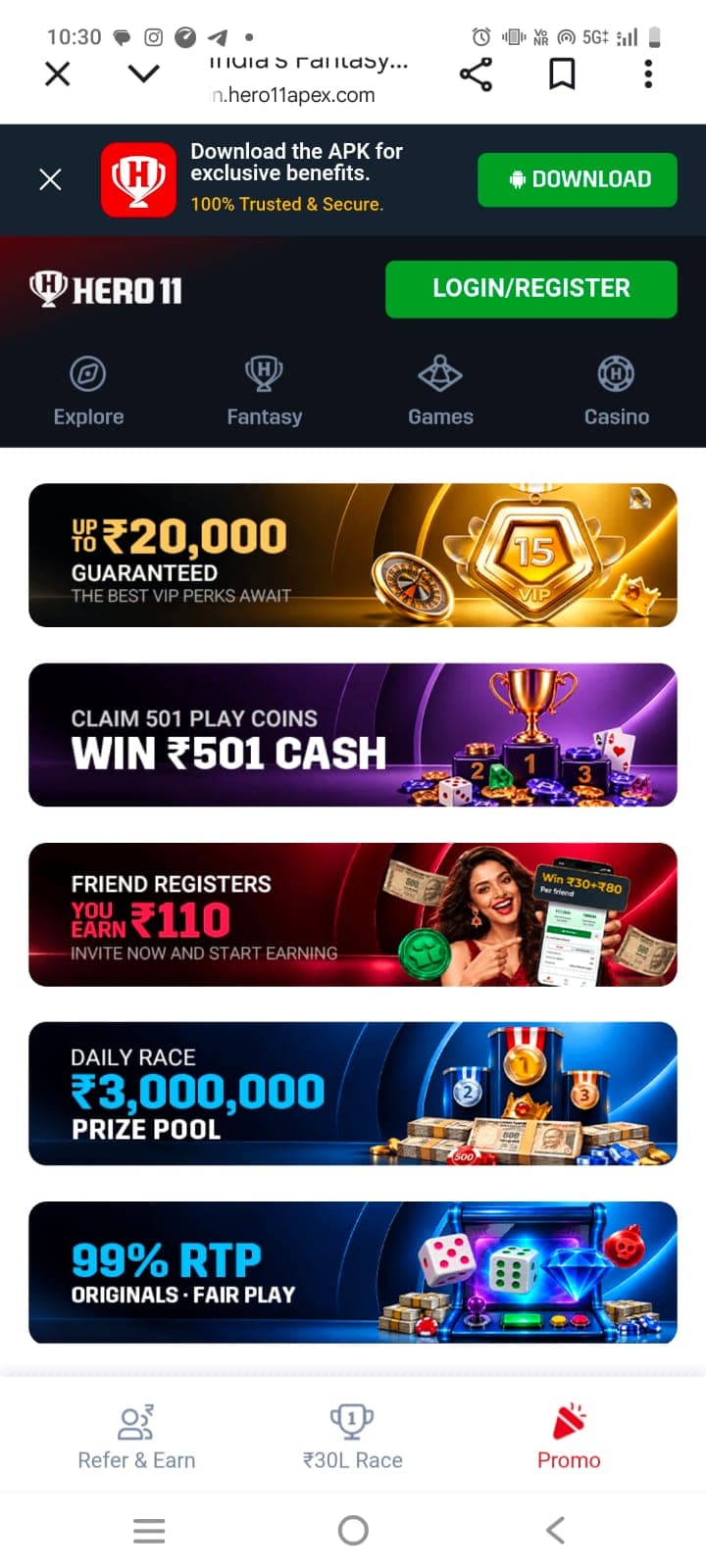
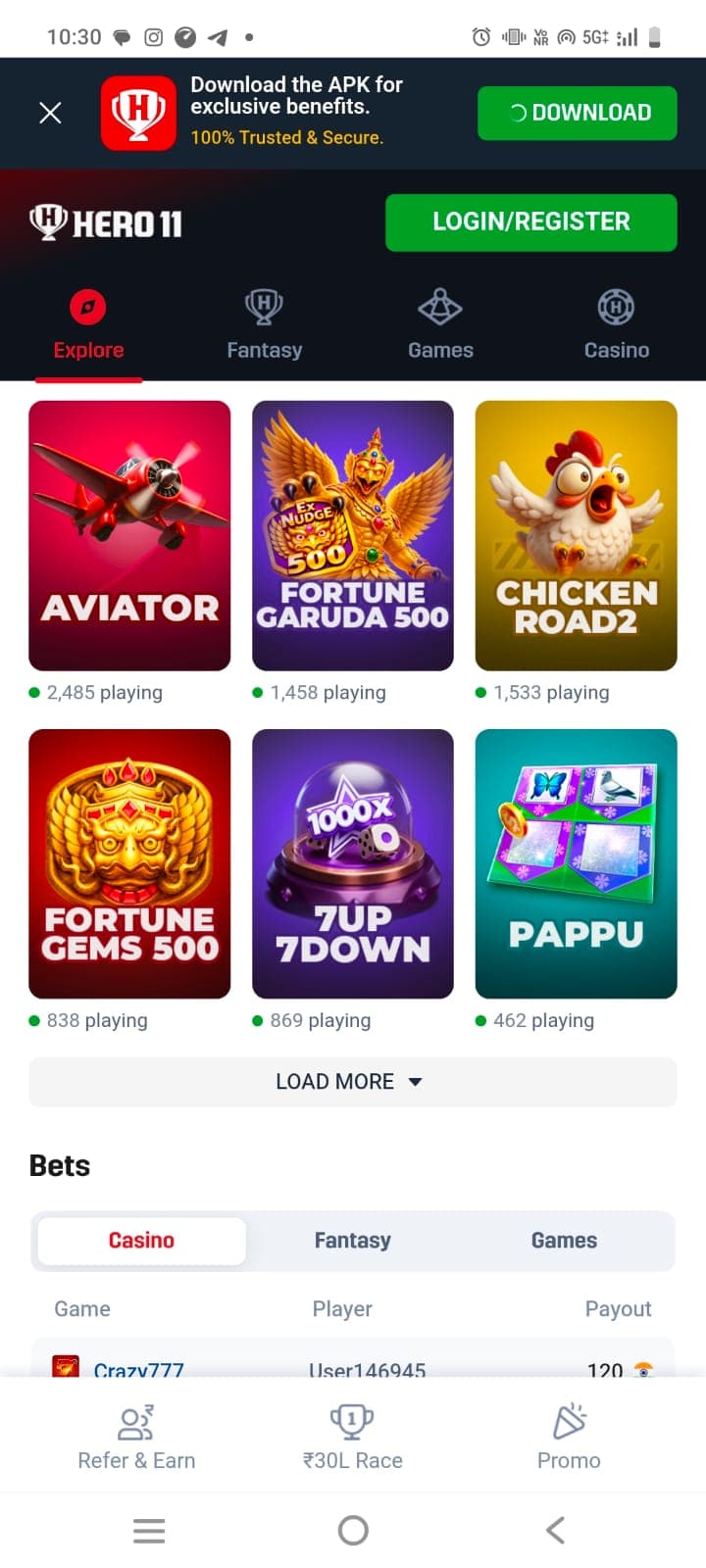
For an overview of the platform interface and game categories, read our Hero11 platform overview and Hero11 app guide.
The Constitutional Doctrine: Skill vs. Chance in India
The foundational principle of Indian gaming law lies in the judicial distinction between games of skill and games of chance.
The Public Gambling Act of 1867
The colonial-era Public Gambling Act of 1867 serves as the central template for anti-gambling laws across India. The statute criminalizes the keeping of, or visiting, 'common gaming houses' for the purpose of wagering.
Crucially, Section 12 of the Public Gambling Act contains an explicit statutory carve-out:
"Nothing in the foregoing provisions of this Act contained shall be held to apply to any game of mere skill wherever played."
This statutory exception has served as the bedrock for modern legal challenges concerning digital gaming, fantasy leagues, and competitive entertainment in India.
Supreme Court Precedents: Chamarbaugwala to Lakshmanan
Over seven decades, the Supreme Court of India has refined the interpretation of "mere skill":
1. State of Bombay v. R.M.D. Chamarbaugwala (1957)
In this historic five-judge constitutional bench ruling (AIR 1957 SC 699), the Supreme Court established that:
- Competitions where success depends to a substantial degree upon the exercise of skill, knowledge, intellect, or judgment are commercial business activities protected under Article 19(1)(g) of the Constitution of India.
- Conversely, gambling activities—where chance predominates—are considered res extra commercium (outside the purview of lawful trade and commerce) and do not enjoy fundamental rights protection.
2. Dr. K.R. Lakshmanan v. State of Tamil Nadu (1996)
In this landmark ruling (1996 2 SCC 226), the Supreme Court affirmed horse racing as a game of skill, articulating the definitive legal test:
"A game of skill, on the other hand, although the element of chance necessarily cannot be entirely eliminated, is one in which success depends principally upon the superior knowledge, training, attention, experience and adroitness of the player."
High Court Jurisprudence on Fantasy Sports
The application of this doctrine to daily fantasy sports contests has been directly tested and upheld across multiple High Courts:
1. Punjab & Haryana High Court (2017) (Varun Gumber v. UT of Chandigarh): The High Court held that creating a fantasy cricket team involves assessing player form, relative pitch conditions, ground history, team balance, and statistical probability. The court conclusively ruled that fantasy sports is predominantly a game of skill.
2. Bombay High Court (2019) (Gurdeep Singh Sachar v. Union of India): Affirmed that fantasy sports participants do not wager on the binary win/loss outcome of a match, but compete based on the aggregate performance of individually drafted players. The court dismissed gambling allegations and affirmed compliance with GST norms.
3. Supreme Court of India: Repeatedly dismissed special leave petitions (SLPs) challenging these High Court rulings, establishing binding national precedent that skill-based fantasy sports contests are lawful commercial enterprises.
Review our complete breakdown of contest structures and scoring tables in our Hero11 fantasy sports guide.
State-by-State Legal Matrix in India
While central jurisprudence protects skill gaming, the Seventh Schedule, List II (State List), Entry 34 of the Constitution of India empowers individual states to enact legislation concerning "Betting and Gambling".
This constitutional division of powers has produced a fragmented regulatory map:
| State | Legal Classification | Governing Legislation & Current Standing |
|---|---|---|
| Andhra Pradesh | Strictly Prohibited | AP Gaming Act (amended 2020) bans all online real-money games, regardless of skill. |
| Telangana | Strictly Prohibited | Telangana Gaming Act bans all digital wagering involving financial stakes. |
| Assam | Prohibited | Assam Game and Betting Act, 1970 prohibits wagering without clear skill exemptions. |
| Odisha | Prohibited | Odisha Prevention of Gambling Act, 1955 imposes broad anti-gambling prohibitions. |
| Tamil Nadu | Restricted / Contested | Enacted the TN Prohibition of Online Gambling Act, 2022. Madras High Court struck down bans on skill games (rummy/poker), but state appeals remain active. |
| Karnataka | Permitted for Skill Games | The Karnataka High Court struck down state legislative amendments banning online skill games in 2022 (AIGF v. State of Karnataka). |
| Nagaland | State Licensed | Regulated under the Nagaland Prohibition of Gambling and Promotion of Online Games of Skill Act, 2016. |
| Sikkim | State Licensed | Regulated under the Sikkim Online Gaming (Regulation) Act, 2008 for licensed intranet operators. |
Residents physically located in Andhra Pradesh, Telangana, Assam, or Odisha are legally barred from creating accounts, making financial deposits, or joining paid contests on platforms like Hero11.
For questions regarding regional compliance, check our Hero11 FAQ directory.
Indian Taxation Framework: 30% TDS & 28% GST
The financial architecture of real-money gaming in India is governed by two rigorous statutory tax regimes enacted by the Ministry of Finance.
Income Tax: Section 115BBJ & Net Winnings Calculation
Effective from April 1, 2023 (Financial Year 2023–24), the Finance Act, 2023 introduced Section 115BBJ and Section 194BA into the Income Tax Act, 1961:
- Flat 30% Tax Rate: All net winnings derived from online gaming are taxed at a flat rate of 30% (plus applicable educational cess and surcharges).
- No Threshold Limit: Unlike past regimes that permitted an annual ₹10,000 TDS exemption threshold, Section 194BA mandates that TDS must be deducted on any net winnings at the time of withdrawal or at the close of the financial year.
- Formula for Net Winnings:
$$ ext{Net Winnings} = ext{Total Withdrawals} - ( ext{Total Deposits} + ext{Opening Balance})$$
- Withholding Obligation: Hero11 is legally required to deduct this 30% tax before releasing funds to the player's bank account and issue an official Form 16A tax credit certificate.
The 28% GST Mandate on Deposits
In October 2023, the GST Council implemented amendments to the Central Goods and Services Tax (CGST) Act, imposing a flat 28% Goods and Services Tax (GST) on the full face value of funds deposited into real-money gaming platforms.
Whether a user deposits ₹1,000 to enter a fantasy cricket contest or to play an arcade game, ₹280 of that deposit is collected as statutory indirect tax by the government. Promotional coin giveaways and bonus incentives cannot be used to circumvent this mandatory statutory obligation.
Learn more about promotional structures in our Hero11 promotions explained guide.
Technical Security & APK Sideloading Risks
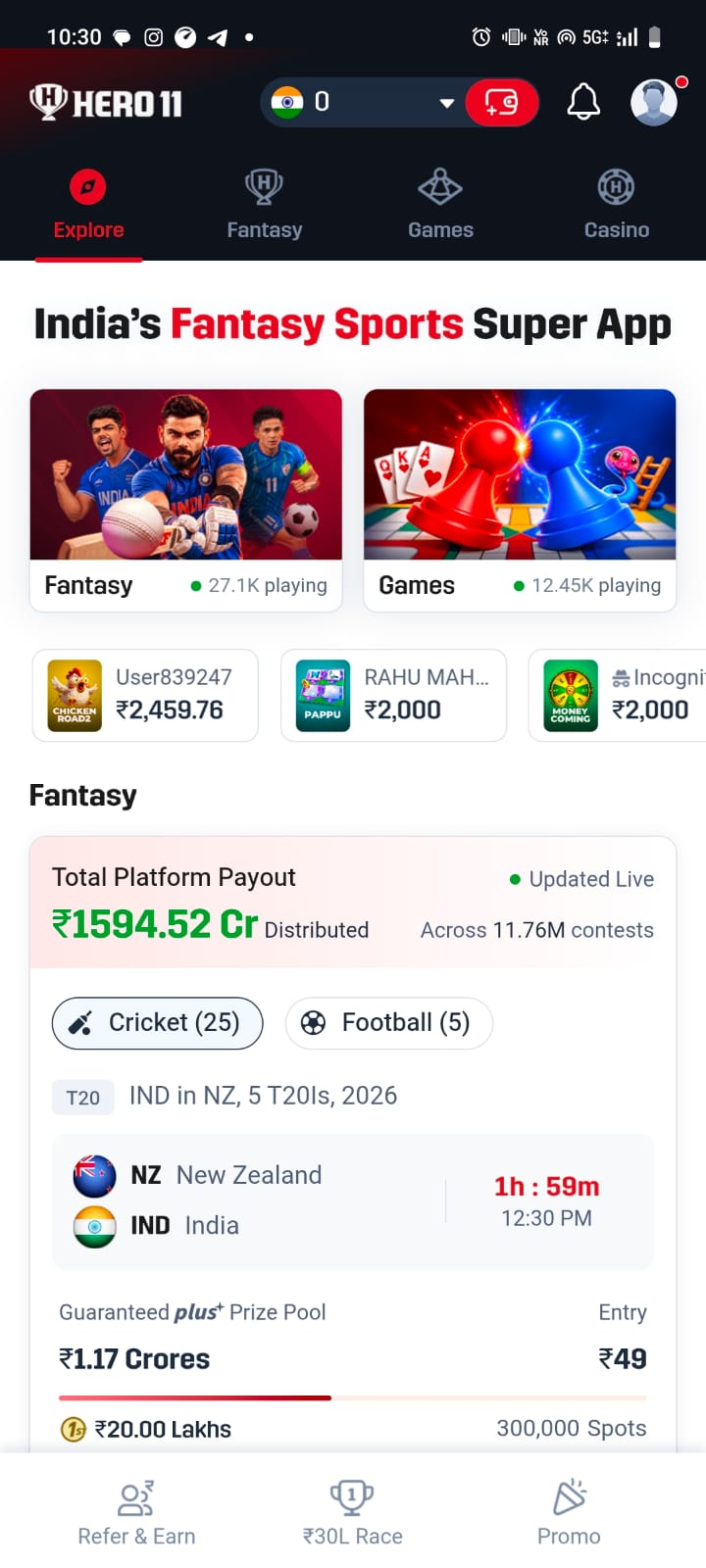
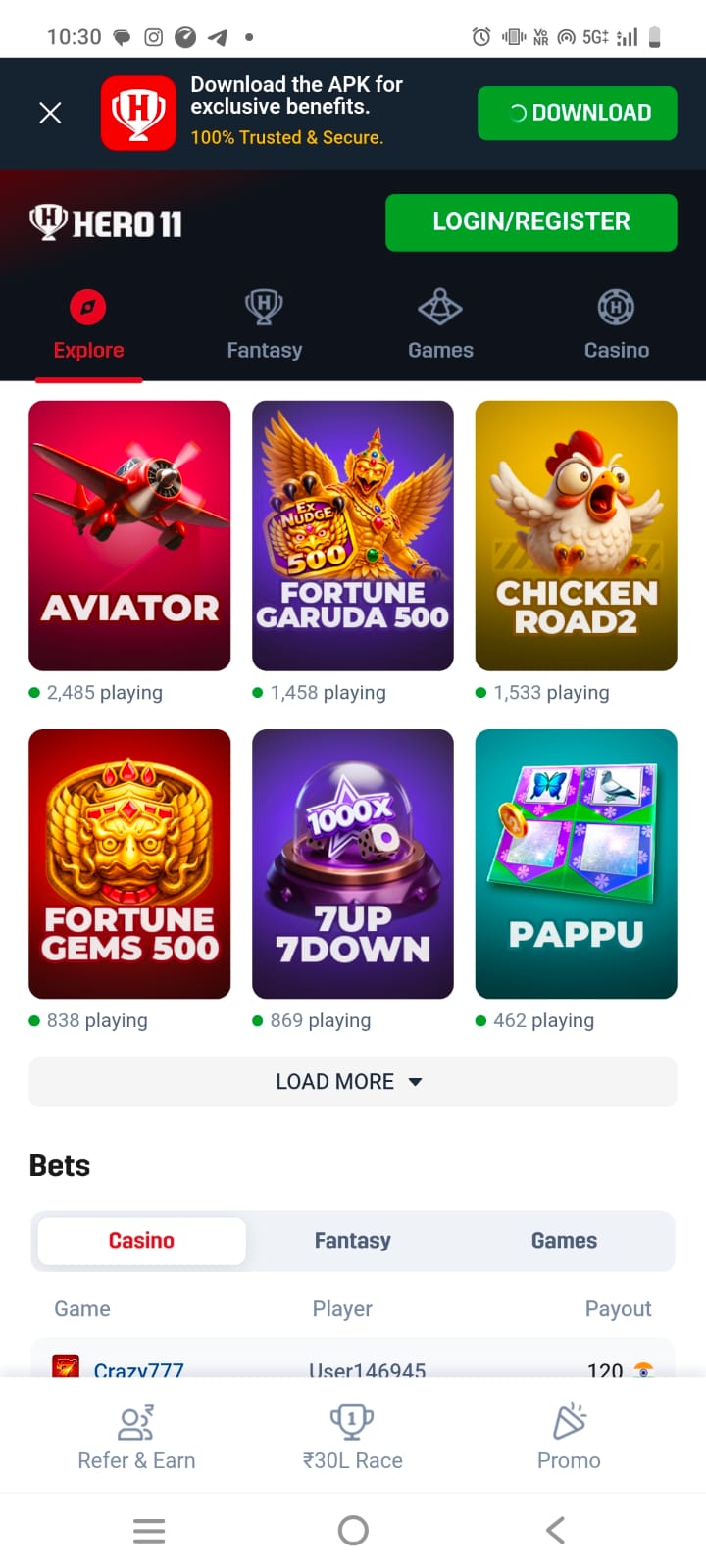
Because Hero11 distributes its Android package directly outside the Google Play Store (as shown in screenshot 4), users must evaluate the technical security implications of APK sideloading.
Sideloading Vulnerabilities
When an application is sideloaded:
1. Absence of Play Protect Auditing: Sideloaded APKs bypass Google Play Protect's continuous automated security scanning, increasing exposure to modified or unverified application packages.
2. Third-Party Mirror Risks: Downloading an APK from unofficial aggregator websites or messaging groups creates severe risks of Trojanized files capable of harvesting financial credentials.
3. Manual Updates: Sideloaded apps do not update automatically through the Android system, meaning users must manually authorize update packages, which can leave unpatched security vulnerabilities active on the device.
Android Permissions Audit: What to Grant vs. Deny
When installing any gaming application, users should perform a rigorous permissions audit in their device settings:
| Android Permission | Justification / Usage | Recommended Action | Risk Rating |
|---|---|---|---|
| Internet / Network Access | Necessary to communicate with game servers and sync live contest data. | Grant | Low |
| Storage / Media Access | Caching game assets and match banner graphics. Modern Android versions restrict this via Scoped Storage. | Grant (Scoped Only) | Low–Medium |
| Location (Fine / Coarse GPS) | Required by operators to verify that the user is not physically located within prohibited states (e.g., Telangana). | Grant (While in Use) | Medium |
| SMS / Read Messages | Often requested for automated OTP reading during authentication. | Deny (Enter OTP manually) | High |
| Contacts / Phonebook | Requested by some apps to facilitate social referrals. | Deny | High |
| Microphone / Camera | Not required unless completing live video KYC validation. | Deny | High |
Review our step-by-step navigation breakdown in our Hero11 app guide.
Data Privacy & The Digital Personal Data Protection Act, 2023
Online gaming platforms collect vast quantities of sensitive consumer information, including banking details, geolocation coordinates, and government identity proofs.
The DPDP Act Framework
Enacted in August 2023, the Digital Personal Data Protection Act (DPDP Act) establishes strict statutory obligations for Data Fiduciaries (such as gaming operators) operating in India:
- Explicit Consent: Data collection must be grounded in clear, affirmative, itemized consent notices.
- Purpose Limitation: User data collected for KYC or contest operations cannot be repurposed or transferred to third-party marketing brokers without separate authorization.
- Right to Erasure: Users possess the statutory right to request the deletion of their personal data upon closing their gaming account, subject to mandatory anti-money laundering (AML) retention periods.
Review our independent editorial privacy standards on our privacy policy page.
Mandatory KYC, PAN Validation & Financial Verification
To comply with guidelines issued by the Reserve Bank of India (RBI) and the Financial Intelligence Unit (FIU-IND), legitimate real-money gaming operators enforce strict Know Your Customer (KYC) protocols:
1. PAN Verification: The player's Permanent Account Number (PAN) is validated against the Income Tax Department's NSDL database to ensure accurate 30% TDS withholding.
2. Bank Account Matching: The name registered on the player's bank account or UPI VPA must precisely match the name on their validated PAN card. Third-party withdrawals to unverified family or friend accounts are strictly blocked.
3. Proof of Identity (POI) & Address (POA): Validated via Aadhaar (through secure masking or DigiLocker integration), Passport, or Voter ID to enforce minimum age (18+) and geofencing restrictions.
Learn how withdrawals and wallet transactions operate in our Hero11 games guide.
Responsible Gaming & Problem Gambling Safeguards
Real-money gaming carries substantial psychological and financial risks. Rapid-cycle games (such as Aviator or Fortune Garuda 500) can stimulate dopamine loops that encourage irrational loss-chasing.
Early Warning Signs of Problem Gambling
- Spending funds allocated for essential household needs, rent, or tuition.
- Constantly increasing stake sizes to achieve the same emotional excitement.
- Experiencing severe anxiety, irritability, or sleep deprivation following losing sessions.
- Attempting to conceal the true extent of time or money spent on gaming from family and friends.
- Borrowing money or liquidating assets to finance continued play.
Practical Harm-Reduction Strategies
1. Set Hard Financial Limits: Determine a daily or weekly loss limit before logging in and never exceed it under any circumstance.
2. Utilize Platform Cooling-Off Tools: Request voluntary self-exclusion or account lockouts if you feel your gaming habits are slipping beyond your control.
3. Treat Gaming as Paid Entertainment: Acknowledge that all casino-style games carry a negative mathematical expectation over time.
4. Seek Professional Counseling: In India, confidential support is available through recognized psychological counseling hotlines, including the National Tele Mental Health Programme (Tele-MANAS) at 14416 or 1800-891-4416.
Read our full editorial principles and risk advisories on our terms of service page.
Frequently Asked Questions
Can an Indian citizen be prosecuted for playing fantasy sports?
No. Because skill-based fantasy cricket and football contests have been repeatedly affirmed as legal under Article 19(1)(g) by the Supreme Court of India, participants in non-prohibited states cannot be prosecuted under anti-gambling statutes for playing fantasy sports.
What should I do if a platform refuses to process my withdrawal?
First, ensure that your account has completed full KYC verification, your PAN details match your banking records, and all promotional wagering turnover conditions have been satisfied. If an operator unlawfully withholds funds, consumers can file grievances through the National Consumer Helpline (NCH) at 1915 or lodge a complaint with the consumer disputes redressal commission.
Can minors participate on Hero11?
No. All real-money gaming and fantasy sports platforms in India strictly prohibit individuals under the age of 18 from creating accounts, making deposits, or participating in contests.